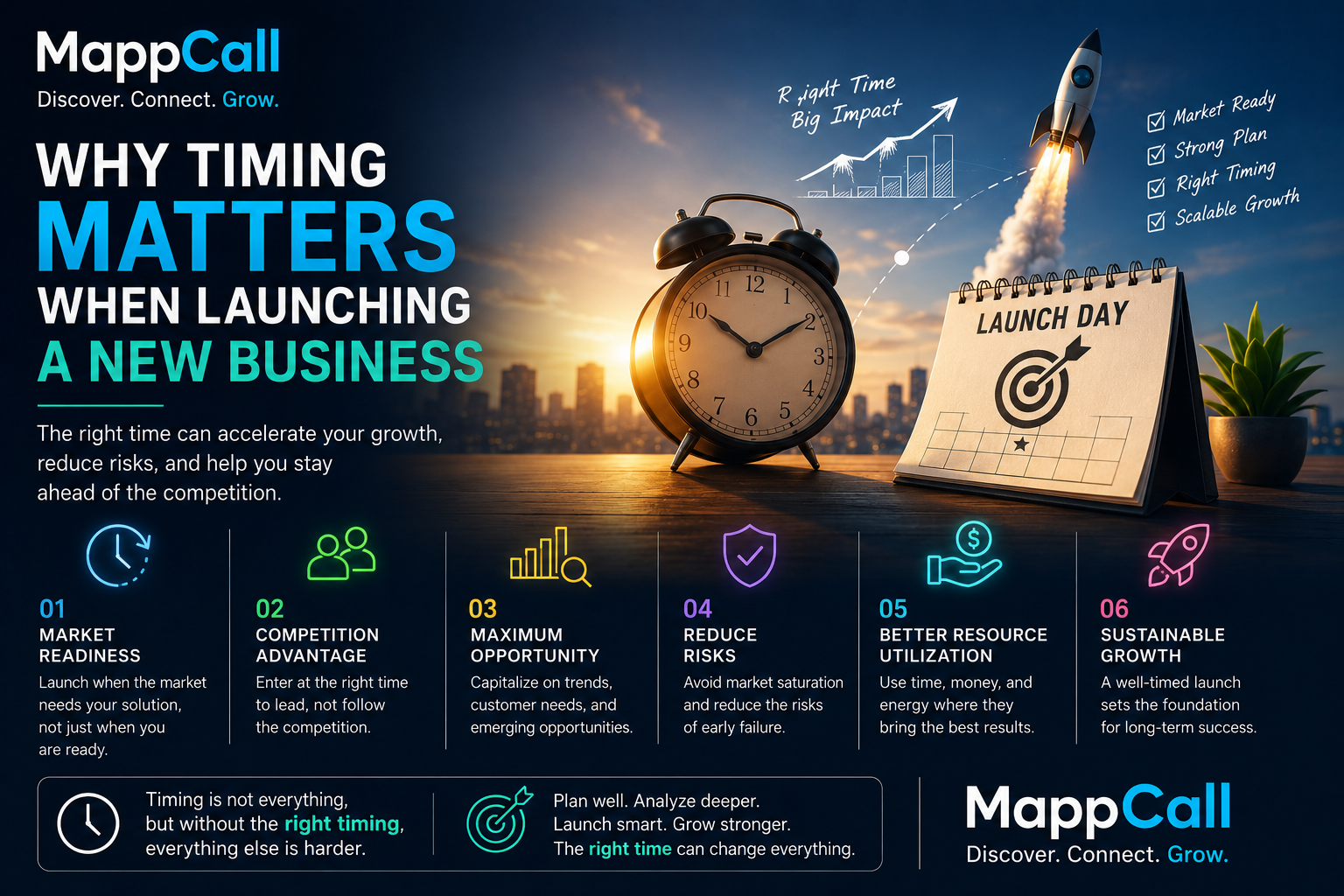
Why Timing Matters When Launching a New Business
1.
Understand the Market Before Launching
A good idea may still fail if the market is
not ready. Before launching, understand customer needs, existing alternatives,
market trends, and competitive conditions. Conversations with potential
customers and industry professionals can provide useful practical insights.
2. Identify
the Right Customer Timing
Customers may have different levels of
urgency depending on the problem being solved. A business should understand
when customers are most likely to need the product or service. Identifying this
timing can help shape the launch message, offering, and sales approach.
3. Watch
Competitor Activity
Competition can influence launch timing.
Entering a market when several businesses are making similar moves may require
stronger differentiation. Entrepreneurs should study what competitors offer and
identify gaps that can create a more relevant opportunity.
4. Start
With Testing Instead of Guessing
Launching does not always need to begin
with a large investment. A small pilot, early customer conversation, prototype,
or limited service can help validate demand. Feedback from relevant
professionals and potential customers can help improve the offering before a
wider launch.
5. Build
the Right Network Early
Networking should begin before the launch,
not after it. Suppliers, mentors, service providers, technology professionals,
marketers, potential customers, and business partners can all contribute to a
successful launch. MappCall can help entrepreneurs discover relevant
professionals and businesses based on their needs and location.
6. Choose
the Right Moment to Communicate
Even a strong product needs effective
communication. Launch messages should reach customers when the problem is
relevant and when the business can respond to interest. Timely communication
can improve engagement and help convert attention into meaningful
conversations.
7. Use
Opportunities That Appear During Launch
New opportunities often emerge while a
business is being introduced to the market. A customer may suggest a new use
case, a professional may offer a partnership, or a supplier may provide a
better solution. Entrepreneurs should stay open to these signals and act when
the opportunity is relevant.
8. Build
Momentum After Launch
Launch day is only the beginning. Continued
communication, customer feedback, networking, and improvement help turn initial
interest into sustainable growth. MappCall can support this ongoing process by
helping users discover and communicate with relevant professionals and
businesses.
MappCall Creative Idea
Idea
→ Market Check → Network → Test → Launch → Respond → Improve → Grow
MappCall creative: a startup launch
timeline showing market research, professional connections, testing, launch,
customer interaction, and growth.
KEY TAKEAWAYS
·
Study market conditions before
launching.
·
Understand when customers are
most likely to need your offering.
·
Watch competitors and identify
market gaps.
·
Test demand before making a
large investment.
·
Build your professional network
before launch.
·
Communicate with customers at
the right time.
·
Stay alert to opportunities and
feedback during launch.
·
Keep improving after launch to
build momentum.
CONCLUSION
Timing can shape how a new business enters
the market, but good timing is not simply about choosing a date. It involves
understanding customers, market conditions, competition, readiness,
professional relationships, and the ability to respond to opportunities.
MappCall helps entrepreneurs discover
relevant professionals and businesses and communicate with them throughout the
launch journey. When a strong idea is supported by market understanding, the
right connections, and timely action, a new business can build a stronger
foundation for growth.
MappCall
— Discover. Connect. Communicate. Grow.